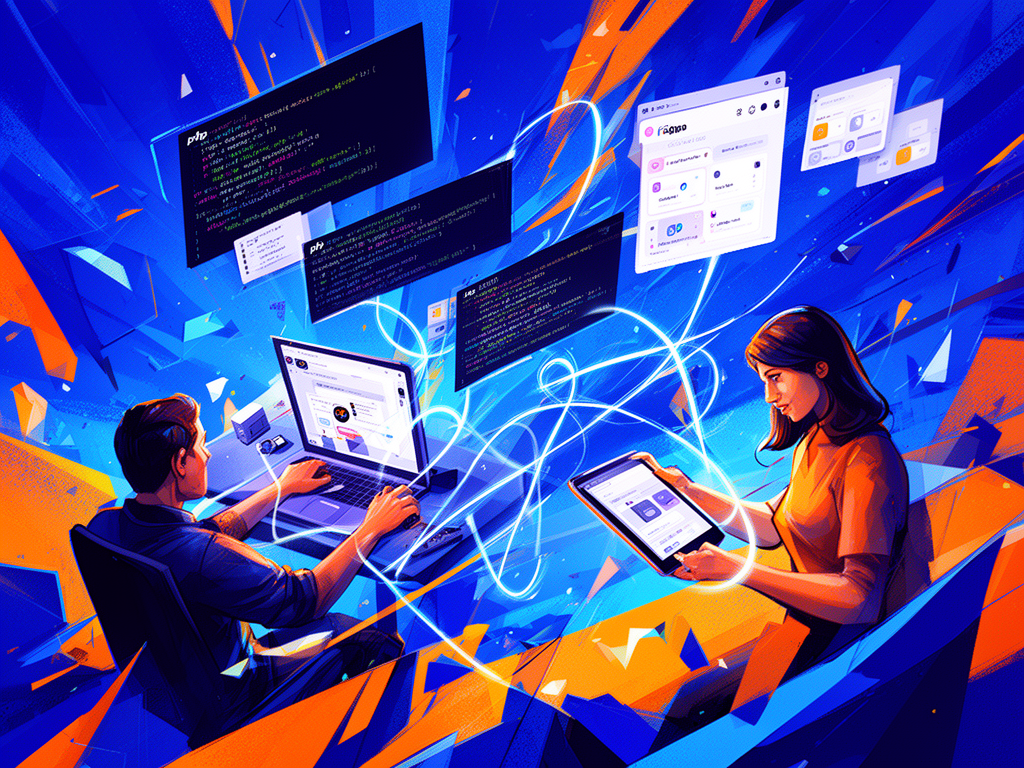
How PHP developers collaborate with designers
Fellow developers, have you ever stared at a designer's Figma mockup, coffee going cold, wondering how the hell you're going to turn those pixel-perfect screens into a living, breathing PHP app? That moment hits hard. It's not just code—it's translation. Designers dream in visuals, we build in logic. And somewhere in the middle, magic happens. Or frustration. Mostly magic, if done right.
I've been there. Late night, screen split between Sketch files and VS Code, scribbling notes on how to hook up that dynamic dashboard with Laravel. PHP's our hammer, but designers hand us blueprints in a different language. This isn't about tools alone. It's people syncing up, sharing the vision, avoiding those soul-crushing revisions. Let's dive in, because getting this right saves sanity and ships better products.
The spark: Why collaboration matters in PHP projects
Picture this: A startup needs a custom e-commerce site. Designer crafts stunning wireframes—clean grids, smooth animations, user flows that feel intuitive. You, the PHP dev, get the handoff. If it's just a zip file dump, you're doomed. Buttons don't align, responsive breaks on mobile, and suddenly that hero slider eats 5 seconds to load because no one thought about server-side rendering.
Collaboration flips the script. PHP shines here because it's glued to the web—HTML/CSS embedded right in, dynamic content popping server-side. Designers aren't outsiders; they're co-pilots. From day one, we loop them in on feasibility. Can that infinite scroll handle 10k products without choking? PHP frameworks like Symfony or Laravel let us prototype fast, showing real data flows early.
I remember a project last year. Designer wanted floating cards with hover effects. Cool, but our API pulled heavy JSON. We Slack'd mid-mockup: "This needs lazy loading via AJAX." She tweaked the design on the spot. Result? A site that loaded in under 2s, users loved it. That's the win—iterative feedback, not silos.
Tools that bridge the gap
No fancy setup needed, but the right ones make life poetic.
- Figma/Sketch + Zeplin/Avocode: Designers export specs—exact hex codes, spacing in pixels, even CSS snippets. PHP devs import to browsers, eyeball mismatches. Pro tip: Use plugins for Laravel Mix exports.
- GitHub Projects or Trello Kanban: Track handoffs. "Design: Login modal approved" → "Dev: Implement with Blade templates." One board, no email hell.
- Prototyping with PHP: Skip static mocks. Spin up a quick Laravel route, pipe in dummy data. Designer clicks through—real feel, instant tweaks.
- Slack/Discord + Loom videos: "Hey, this form validation needs PHP-side checks." Share 30s screen record. Visual > words.
These aren't buzzwords. They're lifelines. In one gig, we used Figma's dev mode to pull CSS straight into our Twig views. Cut markup time by 40%. Designers felt heard; we coded faster.
Real workflows: From wireframe to working prototype
Let's walk a typical flow. Grounded in how teams actually ship.
Start with kickoff. Stakeholder meeting: Business needs → rough sketches. Designer wireframes in Figma. You review early—**"PHP sessions for that cart? Cool, but let's plan auth middleware now."**
Phase 1: Wireframing and specs
Designer builds low-fi. You add tech notes: "This grid? Vuetify with PHP backend via Inertia.js." Export assets. PHP side: Set up routes, models. Seed DB with mock data.
Phase 2: Mockups to prototypes
High-fi designs drop. Prototype in PHP—use Tailwind or Bootstrap, render via Blade. Share localhost:8000 link. Designer tests: "That shadow's off by 2px." Fix live, refresh. Boom, aligned.
Phase 3: Iteration hell? Nah, loops
Feedback rounds. Use issues: "UI: Button hover state" linked to PR. PHP flexibility rules—tweak controllers, hot reload with Vite. Test on real devices together.
Ever built a dashboard? Designer specs charts. You integrate Chart.js with PHP-generated JSON endpoints. Pair program: She styles, you pipe data. Feels like jam session.
Challenges hit. Designers chase trends (glassmorphism?); we chase perf. Compromise: Core PHP handles heavy lifts server-side, JS for flair. Communication kills misalignment—daily standups, 15 mins max.
Handling the tough stuff: Conflicts, deadlines, and growth
Truth: Not every collab sings. Designer pushes micro-animations; your PHP app lags on shared hosting. Or they spec fixed widths, ignoring mobile-first PHP responsiveness.
Common pitfalls and fixes
- Over-design: "Love the parallax, but PHP render times spike." Solution: Static assets via webpack, dynamic bits async. Show benchmarks—PageSpeed scores.
- Spec gaps: No edge cases noted. Ask: "What if user uploads 50MB image?" Pre-empt with validation in PHP forms.
- Remote teams: Time zones suck. Async tools shine—Notion for style guides, shared FigJam boards for brainstorms.
I once had a designer insist on custom fonts everywhere. Site crawled. We A/B tested: Google Fonts subset via PHP headers won. She saw metrics, bought in. Growth moment for both.
Scaling collaboration
Bigger projects? Dedicated teams. UX/UI pros with PHP chops join sprints. Use Laravel Nova for admin prototypes—designers poke data live. Or Symfony with EasyAdmin. Frameworks accelerate: Pre-built components mean less "from scratch" fights.
Hiring tip for PHP shops: Seek devs who speak design. "Ever paired on a handoff?" Full-stack folks bridge naturally—HTML/PHP fusion is PHP's superpower.
Lessons from the trenches: Making it stick
Reflecting on a dozen projects, patterns emerge.
Short story: Midnight crunch, designer pings—"Final tweaks before demo." I spin up a Forge preview, she Zooms in. 20 mins later, golden. Quiet win, high-fives over chat.
What works:
- Empathy first. Understand their world—deadlines from clients, pixel passion. We get bugs; they get "wonky renders."
- Shared language. Terms like "component," "state," "endpoint." Train together.
- Post-mortems. After launch: "What slowed us?" Bake fixes into next Kanban.
PHP's ecosystem helps. Composer packages for UI kits (Livewire for reactive bits), Tailwind JIT for rapid styling. Designers prototype in Tailwind Play, we copy-paste to PHP views. Seamless.
One quiet revelation: Collaboration isn't efficiency hack. It's joy. Turning "their" design into "our" app. Fewer solos, more symphonies.
Building better together
We've all felt that rush—deploy button hit, designer texts "Nailed it." PHP devs and designers aren't opposites. We're web's yin-yang. Lean in, listen close, code with heart. Next project, grab coffee (virtual or real), sync visions. The code that follows? It'll hum. And you'll both sleep better.