Contents
- 1 Laravel vs CodeIgniter: Which one for your next project?
- 1.1 The pull of simplicity: Why CodeIgniter still whispers "just get it done"
- 1.2 Laravel's ecosystem: Power that grows with you
- 1.3 Head-to-head: Performance, scalability, and real-world fit
- 1.4 When to pick each for your projects
- 1.5 Lessons from the trenches: Trade-offs that linger
- 1.6 Future-proofing your stack in 2026
Laravel vs CodeIgniter: Which one for your next project?
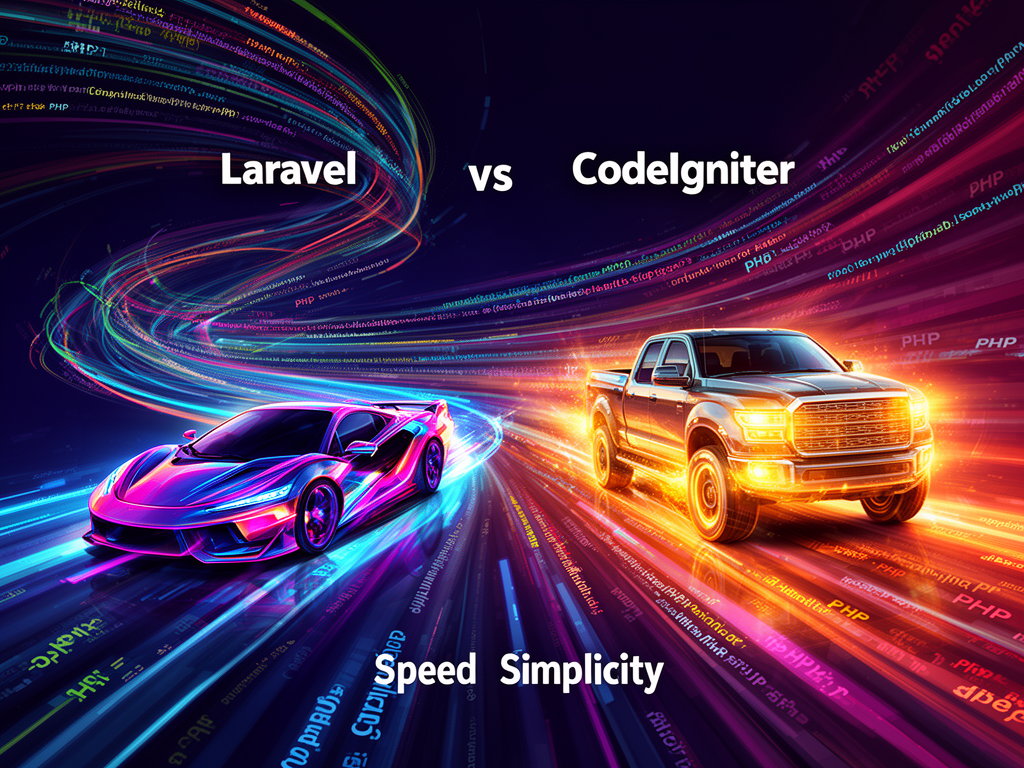
I've been knee-deep in PHP frameworks for over a decade now. Late nights staring at a flickering screen, coffee going cold as I wrestle with routing bugs or scalability headaches—that's where real choices get made. Laravel and CodeIgniter have both saved my hide on projects, but picking between them feels like choosing between a sleek sports car and a reliable pickup truck. One's built for the long haul with all the bells and whistles; the other's quick off the line and won't break the bank. Let's break it down for your projects in 2026, drawing from fresh updates and hard-won experience. Fellow developers, if you're eyeing a new build on Find PHP, this is your map.
The pull of simplicity: Why CodeIgniter still whispers "just get it done"
Remember that frantic weekend in 2018? I had a client demanding an MVP for a small e-commerce site—live in 48 hours, on a shoestring shared host. CodeIgniter was my go-to. Its lightweight MVC architecture means you unpack, configure minimally, and code. No bloat. Routing? Dead simple. Database queries fly with its Active Record pattern—fast CRUD ops without the ceremony.
Fast-forward to 2026. CodeIgniter's evolved quietly: improved security, faster load times, low hosting costs. It's very fast execution speed, lower memory usage, perfect for small teams or prototypes. Building a simple dashboard or internal tool? You'll deploy quicker than debugging Laravel's dependency tree.
But here's the rub—I've outgrown it on bigger gigs. Its slower development pace leaves you hacking modules with third-party hooks. No native modularity, so scaling feels manual. Great for beginners grasping MVC, though. Have you ever watched a junior dev light up when they route their first endpoint in under five lines?
Laravel's ecosystem: Power that grows with you
Switch scenes: 2022, scaling a SaaS platform for 10k users. CodeIgniter choked under queues; Laravel's Eloquent ORM, job queues, and event broadcasting turned chaos into elegance. Laravel Octane in 2026? Game-changer—high-performance server that makes it zip. Add Sanctum/Passport for APIs, Redis caching, AI-ready hooks. It's not just a framework; it's a full-stack orchestra.
Performance? Raw speed lags CodeIgniter—moderate execution, higher memory. But optimize with caching, and it shines for APIs and scalability. Robust testing via PHPUnit, Artisan CLI automating migrations, reverse routing propagating changes automatically. Dependency injection? Seamless.
Downsides hit hard early: steeper curve, resource-hungry for tiny apps. I recall cursing its "magic" during onboarding—feels overwhelming until MVC clicks.
Head-to-head: Performance, scalability, and real-world fit
Let's cut to tables—numbers don't lie, especially when you're budgeting server spins.
Performance snapshot (2026 updates)
| Feature | Laravel | CodeIgniter |
|---|---|---|
| Execution Speed | Moderate (Octane boosts) | Very Fast |
| Memory Usage | Higher | Lower |
| Caching | Redis, Memcached, built-in | Limited |
| API Performance | Excellent | Good |
| Scalability | High | Medium |
Laravel edges scalability with queue abstraction, MariaDB/AWS support. CodeIgniter scales via caching but demands dev chops for big loads.
Error handling and dev experience
Laravel's exception handler and Monolog logging? Configurable per environment—detailed in dev, locked down in prod. Custom pages smooth UX. CodeIgniter's simple, but less sophisticated—no contest for complex apps.
Community vibes from TrustRadius echo this: Laravel scores 10/10 for mid-sized firms; CodeIgniter nails small biz speed but feels "missing libraries."
What about modularity? Laravel partitions projects natively. CodeIgniter? Third-party tedium.
When to pick each for your projects
Your project's heartbeat dictates the choice. I've shipped both—here's the gut check.
-
Grab CodeIgniter if:
- MVP or CRUD-heavy (dashboards, blogs).
- Tiny team, low-cost hosting (GoDaddy vibes).
- Speed trumps features—deploy yesterday.
- Beginner-friendly ramp-up.
-
Laravel all the way if:
- SaaS, APIs, rapid scaling ahead.
- Long-term maintainability (events, queues).
- Modern tools: testing, Artisan magic.
- Enterprise echoes or growing user base.
Startups? CodeIgniter for prototype validation. Enterprises? Laravel's ecosystem wins. One project taught me: hybrid starts possible, but migration pains mount.
Lessons from the trenches: Trade-offs that linger
Picture this: 3 AM, 2025 refactor. CodeIgniter app ballooned—queries raw, no queues. Ported to Laravel in weeks; Eloquent relationships slashed query time 40%. Emotional high? Immense. But that initial hump? Brutal for solo devs.
Popularity shift: Laravel dominates forums, packages via Composer. CodeIgniter's forum helps, but Laravel's community feels alive—Stack Overflow threads resolve in hours. User reviews hammer it: "Laravel's the upgrade from CodeIgniter," one dev said. Another: "CodeIgniter for fast release; Laravel for everything else."
Security? Both tightened in 2026—Laravel's middleware edges ahead. Learning? CodeIgniter whispers; Laravel roars once fluent.
Future-proofing your stack in 2026
PHP's ecosystem pulses—Laravel integrates AI architectures, Octane for edge performance. CodeIgniter stays nimble, low-overhead. For Find PHP readers hunting gigs or hires, know this: Laravel devs command premiums for scalability; CodeIgniter specialists shine in rapid prototypes.
Blend emotion with pragmatism. I once bet on CodeIgniter for a "quick win"—scaled poorly, client churned. Laravel next? Thrived. Yet, a micro-site last month? CodeIgniter crushed it, guilt-free.
Questions for you: Deadline burning? Simplicity wins. Vision expansive? Bet on batteries-included.
Ultimately, neither's "better"—they're tools for moments. Choose the one that fits your project's soul, code with intention, and watch it breathe life into something real. That quiet satisfaction, as lines compile clean and servers hum steady, it's why we do this.