Contents
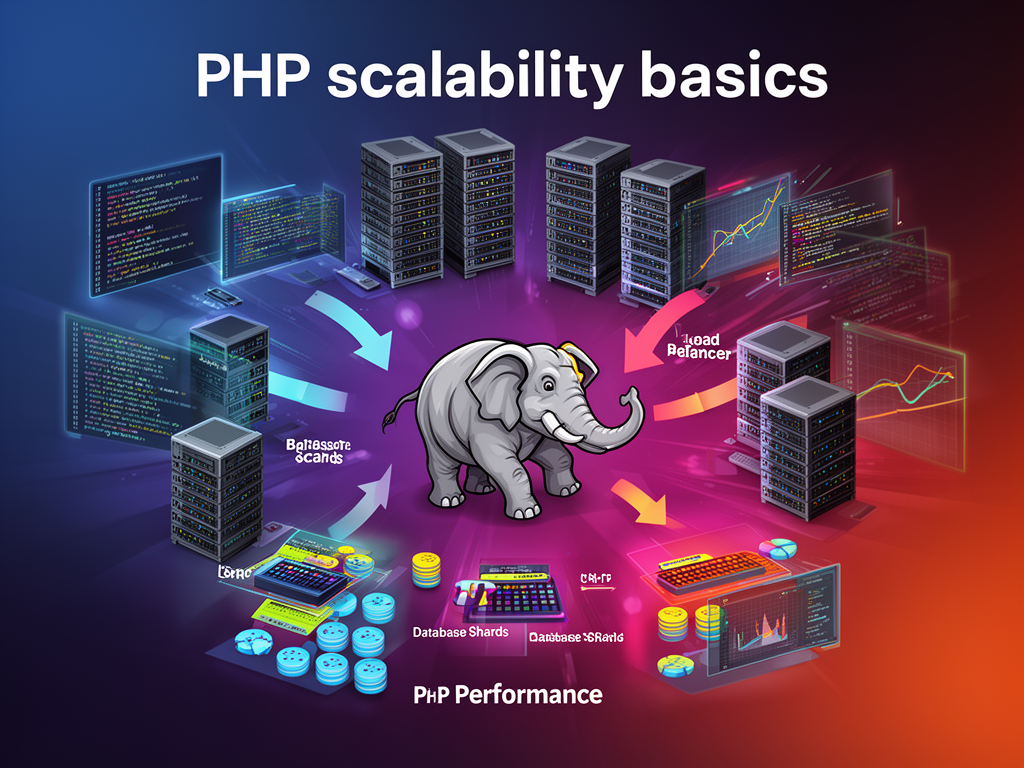
PHP scalability basics
Friends, picture this: it's 2 AM, your site's humming along fine until suddenly traffic spikes. Notifications explode—pages loading slow, users bouncing. That knot in your stomach? I've felt it too many times. Scaling PHP isn't some abstract beast; it's the quiet art of keeping your code breathing under pressure. Let's walk through the basics together, from code tweaks to architecture shifts that actually stick.
I've been there, refactoring a legacy app that choked on 10k concurrent users. What saved us wasn't magic—it was methodical steps. PHP scalability starts with optimizing what you have, then layering on tools that handle growth. No fluff, just practices that deliver real throughput.
Why PHP still crushes it for scale
PHP powers giants like Facebook, Wikipedia. Why? It's battle-tested, with PHP 8+ bringing JIT compilation that compiles code to machine speed on the fly. But scalability isn't automatic. Poor habits kill performance before servers do.
Have you profiled your app lately? Tools like Blackfire or Xdebug reveal bottlenecks—loops eating CPU, queries dragging. Start there. One project, we shaved 40% off response times just by spotting redundant DB calls.
Key mindset: think horizontal scaling early. Vertical (bigger servers) hits limits fast. Distribute load across instances with Nginx or HAProxy.
Code-level wins: Make PHP lean
Efficiency begins in your editor. Legacy code? Refactor ruthlessly. Use PHP 8.3's attributes, union types—small changes, big gains.
Memory management that doesn't leak
PHP's garbage collector works hard, but help it. Generators with yield process huge files line-by-line, not all at once. Remember that 1GB log parser choking your server? Swap to this:
function processLargeFile($filePath) {
    $handle = fopen($filePath, 'r');
    try {
        while (!feof($handle)) {
            yield fgets($handle);
        }
    } finally {
        fclose($handle);
    }
}
No more OOM errors. Unset variables post-use; it nudges GC.
Caching: Your first scalability multiplier
Don't recompute. Roll a simple LRU cache:
class DataProcessor {
    private array $cache = [];
    private array $cacheTimestamps = [];
    private int $maxCacheSize;

    public function processData(string $key, callable $heavyOperation, int $ttl = 3600): mixed {
        if ($this->isValidCacheEntry($key, $ttl)) {
            return $this->cache[$key];
        }
        $result = $heavyOperation();
        $this->maintainCacheSize();
        $this->cache[$key] = $result;
        $this->cacheTimestamps[$key] = time();
        return $result;
    }
    // ... (isValidCacheEntry and maintainCacheSize methods)
}
Layer Redis or Memcached for distributed caching. OPcache for bytecode? Mandatory—speeds script loads 2-3x.
Strings? Ditch loops for implode(), strtr() over str_replace()—four times faster. Building HTML? Output buffering:
ob_start();
foreach ($data as $item) {
    printf('<div>%s</div>', htmlspecialchars($item));
}
return ob_get_clean();
Feels trivial, but scales to millions of rows.
Database: The silent scalability killer
Ever seen a app crawl not from PHP, but MySQL? Databases bottle most scaling woes[13]. Optimize queries first.
Query smarts and batching
Aggregate hits: one bulk insert beats 1000 singles. PDO with prepared statement caching:
class DatabaseOptimizer {
    private PDO $pdo;
    private array $queryCache = [];

    public function batchInsert(array $records, string $table): void {
        $columns = array_keys($records[0]);
        $placeholders = str_repeat('(?, ?, ), ', count($records) - 1) . '(?, ?)';
        $query = "INSERT INTO $table (" . implode(',', $columns) . ") VALUES $placeholders";
        $params = [];
        foreach ($records as $record) {
            $params = array_merge($params, array_values($record));
        }
        $stmt = $this->pdo->prepare($query);
        $stmt->execute($params);
    }
}
Index wisely, limit fields: SELECT id, name FROM users over *. Connection pooling via ProxySQL reuses links.
Sharding and replication for the win
Read replicas split load. Shard by user ID for writes. NoSQL like MongoDB if schemas flex. CDNs offload statics—images, JS fly faster.
Beyond code: Architecture and ops
Scaling's holistic. Load balancing spreads traffic. Stateless sessions in Redis—sessions don't pin to one server.
Async? Swoole or RoadRunner for coroutines, 10x throughput on long-polls. Microservices? Break monoliths via Laravel queues, Kubernetes orchestration.
Server tweaks: PHP-FPM pools tuned to CPU cores, memory limits realistic. Disable debug in prod. Close DB connections explicitly.
What about monitoring? New Relic or Prometheus catches spikes early. One outage taught me: log everything, alert on latency.
Real-world traps I've dodged
- N+1 queries: Eager load relations in Eloquent.
- File I/O: Async jobs for uploads.
- Sessions: Redis, not files.
Test under load—Apache Bench or k6. Scale hits people too: automate deploys[13].
Colleagues, scalability basics boil down to discipline—profile, cache, distribute. That late-night panic fades when your app just… handles it. Next time traffic surges, you'll lean back, coffee in hand, knowing you've built something resilient.