Contents
PHP Developer Burnout: Causes and Prevention
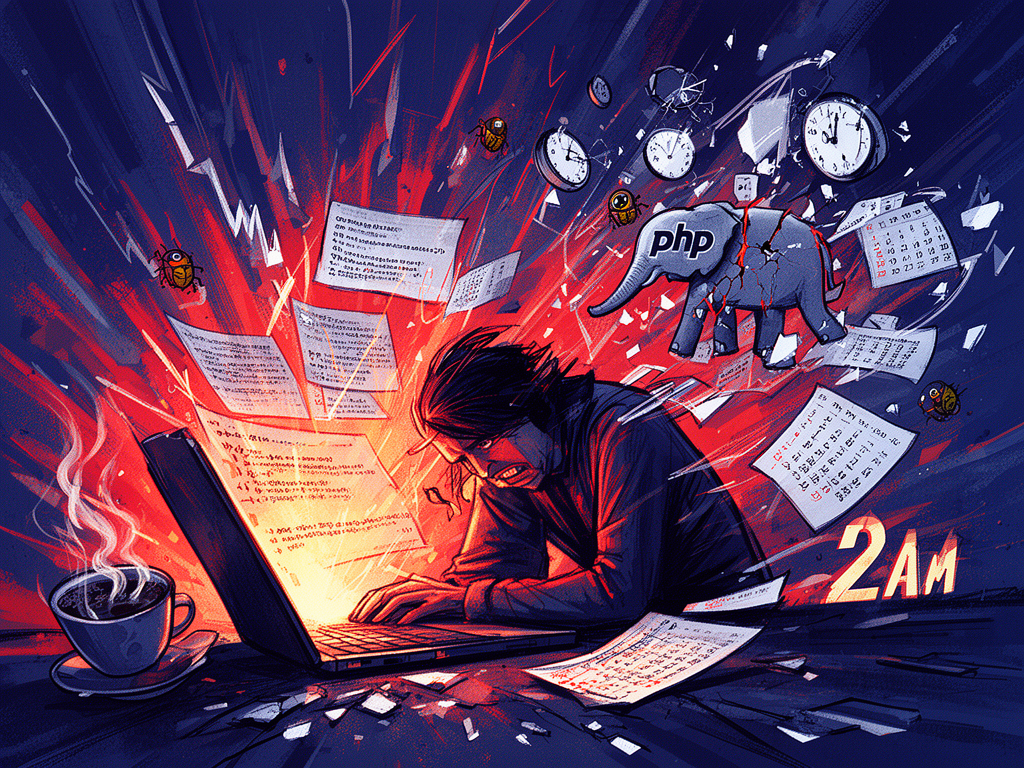
Hey, fellow PHP devs. Picture this: it's 2 AM, your screen's glow is the only light in the room, and you're wrestling with a Laravel migration that's gone sideways. Coffee's gone cold. That nagging headache? It's your third this week. You've been here before, haven't you? Pushing through because the deadline's tomorrow, the client's breathing down your neck, and somehow, saying "no" feels impossible.
Burnout isn't just a buzzword in our world. It's real, it's brutal, and it hits PHP developers hard—those of us knee-deep in Symfony projects, WordPress customizations, or scaling monolithic apps that never quite behave. Surveys show up to 83% of developers have faced it, often from relentless workloads that bleed into nights and weekends. I remember my own slide into it: a six-month sprint on an e-commerce platform where scope creep turned a two-week feature into endless firefighting. Motivation vanished. Code that once flowed felt like pulling teeth.
This isn't about weakness. It's about the grind we all know too well. Let's unpack the causes, spot the signs early, and arm ourselves with prevention that actually works. Because you deserve to code with fire in your belly, not drag yourself to the keyboard.
The Hidden Triggers in PHP Land
Why does burnout sneak up on us PHP folks? It's not random. Our ecosystem—vibrant but demanding—amplifies the usual suspects.
First, impossible deadlines and poor planning. You've got a PHP 8.3 upgrade looming, but the PM insists on launching by Friday. Estimates? Wild guesses. Result? Overtime marathons. Nearly 23% of engineers work extra hours at least 10 days a month, and scope creep hits 62% of projects, piling on stress.
Then there's meeting overload and fragmented focus. Standups, client calls, Slack pings—developers spend more time talking code than writing it. In PHP teams, this means jumping from debugging a Composer dependency to explaining REST endpoints to non-tech stakeholders. Deep work? Rare. Your flow state gets shredded.
Technical debt is our silent killer. That legacy codebase with outdated CakePHP patterns or untested procedural scripts? It festers. Deployments become fear-fests without proper CI/CD, automated tests, or rollback strategies. We hack fixes at night instead of refactoring during sprints.
Don't forget micromanagement and lack of autonomy. "Why this framework? Use what I say." Or constant interruptions: "Urgent bug—fix now!" High workloads mix with pressures to upskill after hours—learning Rector for refactoring or Psalm for static analysis—just to keep pace.
And the emotional side? No sense of accomplishment. Grinding on "useless" features, like tweaking admin panels no one uses, drains you. Add isolation—remote PHP gigs where you're the only backend dev—and cynicism creeps in.
Real talk: during COVID, 81% of UK software engineers felt more burnout from workload spikes and uncertainty. PHP devs aren't immune; we're often the backbone of web apps that can't afford downtime.
Spotting the Red Flags Before It's Too Late
Burnout doesn't scream. It whispers until it roars. Know the signs—mental, emotional, physical—and catch it early.
- Exhaustion that lingers: You wake up tired, dreading the IDE. Energy's gone; even simple tasks like routing in Slim feel monumental.
- Cynicism and detachment: Work frustrates you. Coworkers? Distant. That company mission? Numb to it.
- Productivity plunge: Bugs slip through. PRs take forever. Small issues balloon because focus is shot.
- Physical toll: Sleepless nights (brain won't shut off on that Doctrine query), headaches, gut issues, dizziness. Muscle pain from hunching over the keyboard.
- Lack of motivation: No drive to code—or live. Isolation hits; hobbies vanish.
As a dev lead once told me over coffee: "Watch for the quiet ones. They stop engaging in code reviews." If you're worrying over every commit or feeling perpetually behind, that's the alarm.
These overlap with depression—exhaustion, bad thoughts, concentration fog. If it's bad, talk to someone. But often, it's burnout's rocket fuel running dry: we burn hot, then empty.
Reclaiming Your Edge: Prevention That Sticks
Enough diagnosis. Let's fix it. Prevention isn't fluffy—it's tactical, team-level changes that let you thrive in PHP without the crash.
Start with boundaries like steel. Block 3-hour focus chunks on your calendar—defend them fiercely. Use signals: headphones on means "do not disturb." Batch comms: save questions for standups, not random DMs. Turn off Slack during deep dives unless servers are melting.
Budget for tech debt religiously. Dedicate 10-20% of sprints to refactoring. Track it in Jira alongside features. Propose it in planning: "This legacy auth needs PSR-18 compliance—here's the trade-off." Google's approach worked; yours can too. Automated tests, loose coupling, fast rollbacks—they kill deployment fear.
Track and balance workloads. Use time tracking to spot trends—tasks dragging? Overtime creeping? Tools like Jellyfish flag after-hours work or context switches. Aim for sustainable utilization; rotate on-call so no one's the eternal firefighter.
Leads and teams: listen, empower, protect. When a dev says "this deadline's impossible," believe them. Let tool choice (PHPUnit vs. Codeception?) be theirs. No blame games post-bug. Promote work-life balance: no weekend commits, flexible hours, remote options. Interrupt budgets—2-3 ad-hoc questions per day max.
For you solo: confront and set limits. Tell your lead: "I log in at 9, out at 6. No nights." Take breaks guilt-free. Say "I need another day to do this right." Exercise, hobbies—recharge outside code.
Build flow guardrails. Streamline with automation: Docker for envs, GitHub Actions for PHP CS Fixer and tests. Less manual drudgery, more creation.
I've seen it transform teams. One PHP shop I consulted slashed burnout by mandating "no-meet Wednesdays" for coding marathons. Output soared; smiles returned.
Personal Rituals That Saved Me
On my worst streak, I ritualized recovery. Short walks mid-day—fresh air resets the brain. Weekly "offload" journals: dump worries about that stubborn MySQL optimization. Sleep hygiene: no screens post-10 PM.
Experiment: one week, protect focus blocks. Track lines of clean, tested PHP code. You'll code better, faster.
And remember, PHP's ecosystem evolves—lean into it. Communities like PHPBenelux or Laracon remind us we're not alone.
Burnout's not inevitable. It's a signal: time to recalibrate. Spot it, act, thrive. Your next pull request awaits with the spark you were born with.