Contents
- 1 PHP Developer vs Software Engineer: Differences explained
PHP Developer vs Software Engineer: Differences explained
Fellow developers, have you ever stared at a job posting wondering if you're a PHP developer or stepping into software engineer territory? I've been there—late night, coffee gone cold, scrolling through listings on platforms like Find PHP, trying to figure out if that senior role wants my Laravel wizardry or a full system blueprint. It's not just semantics. These titles mark real paths in our craft, especially in the PHP world where quick web apps can balloon into enterprise beasts. Let's unpack this, not with dry charts, but the kind of clarity that hits home after debugging a production nightmare.
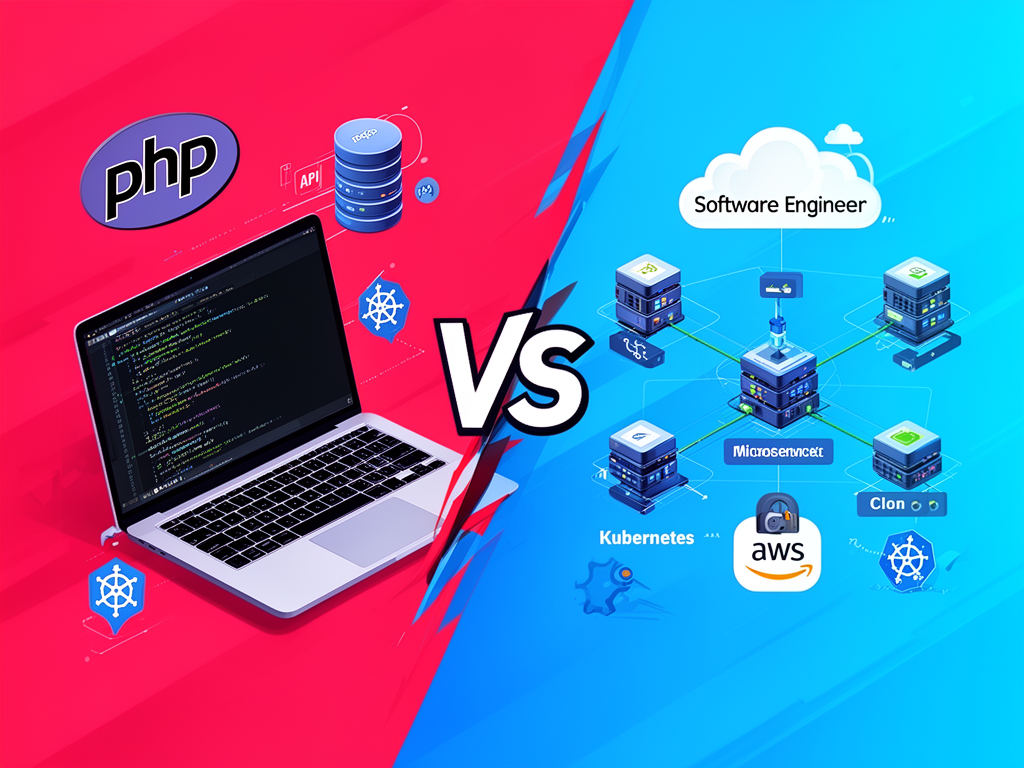
PHP developers thrive in the trenches of code—building features, wiring up APIs, making sites hum. Software engineers? They architect the battlefield itself, ensuring it scales when traffic spikes or requirements shift. The line blurs in small teams, but understanding it sharpens your edge, whether you're hunting jobs or hiring that next specialist.
What a PHP Developer really does
Picture this: a mid-sized e-commerce site needs a new checkout flow. As a PHP developer, you're the one translating sketches into reality. You fire up Laravel, craft models with Eloquent, hook into MySQL for inventory checks, and sprinkle JavaScript for that smooth UX. It's hands-on, iterative, rewarding when users click "buy" without a hitch.
Core responsibilities pull straight from the PHP ecosystem:
- Coding and feature builds: Writing clean PHP 8.x code, leveraging OOP, namespaces, and Composer for dependencies.
- Framework mastery: Diving into Laravel for rapid prototyping—routing, migrations, queues—or Symfony for robust enterprise components like HttpKernel and Messenger.
- Database wizardry: Optimizing SQL queries with joins, indexes, and caching; handling MySQL or PostgreSQL like old friends.
- API and front-end glue: Building RESTful endpoints, integrating GraphQL, and blending HTML/CSS/JS for full-stack delivery.
- Testing and debugging: Unit tests with PHPUnit, fixing those sneaky exceptions, ensuring OPcache speeds things up.
I remember a project where a simple cart update ballooned into refactoring half the backend. That rush of green tests? Pure gold. Soft skills seal it—problem-solving under deadline pressure, chatting requirements with designers, adapting to that "one more feature" pivot.
The software engineer's bigger canvas
Now zoom out. A software engineer isn't just coding; they're engineering resilience. For a PHP-heavy system, that means designing microservices where Laravel apps talk to Symfony services via queues, all orchestrated on Kubernetes. They're the voice saying, "This will handle Black Friday traffic."
Their world spans:
- System architecture: Blueprints for scalability—microservices, event-driven flows, distributed caching.
- DevOps and optimization: CI/CD pipelines with GitHub Actions, Docker containers, cloud tweaks on AWS or Azure for peak performance.
- Leadership and integration: Mentoring juniors on design patterns, aligning tech with business goals, securing against breaches from the ground up.
- Long-term vision: Planning for tech debt, performance profiling with Blackfire, evolving monoliths to modular beasts.
Engineers think in systems. Developers execute features. One Friday evening, I watched an engineer refactor our PHP monolith into services. No drama, just quiet foresight that saved us months later.
Side-by-side: Responsibilities that matter
| Responsibility | PHP Developer | Software Engineer |
|---|---|---|
| Daily Focus | Coding features, APIs, UI logic in PHP frameworks | Architecting scalable systems, DevOps pipelines |
| Scope | Application-specific: Laravel routes, Eloquent queries | System-wide: Microservices, cloud integration |
| Testing | Unit/integration tests, debugging PHP apps | System-level QA, load testing frameworks |
| Collaboration | With designers, other devs | Cross-team: Product, DevOps, business stakeholders |
| Optimization | Query tuning, opcode caching | Performance profiling, distributed scaling |
| Mentorship | Junior code reviews | Technical leadership, standards setting |
This table isn't theory—it's pulled from real hiring checklists and role breakdowns. PHP devs shine in rapid delivery; engineers ensure it lasts.
Skills showdown: PHP dev toolkit vs engineer arsenal
Ever felt under-skilled for that "engineer" title? Let's break it down with PHP in mind. Both roles demand solid foundations, but depth and breadth diverge.
PHP developer must-haves
You're job-ready with these, straight from ecosystem demands:
- Core PHP fluency: PHP 8.x features—attributes, match expressions, error handling.
- Frameworks: Laravel (Eloquent, Artisan), Symfony (bundles, Flex), maybe CodeIgniter for legacy.
- Databases and beyond: SQL mastery (CTEs, indexing), NoSQL like MongoDB, Git workflows.
- Full-stack basics: JS frameworks (Vue/React), REST/GraphQL APIs, unit testing.
- Soft edge: Adaptability—new packages drop weekly—plus clear comms for team handoffs.
Mid-level? Nail 3+ years, OOP/MVC, basic DevOps. Senior PHP devs add high-traffic tweaks: queues, caching with Redis.
Software engineer superpowers
Here, PHP is one tool in a vast kit:
- Architecture depth: Design patterns, microservices, event sourcing in PHP contexts.
- DevOps heavy: CI/CD, Docker/K8s, cloud (AWS Lambda for PHP apps), monitoring.
- Broad tech: Beyond PHP—distributed systems, security protocols, performance at scale.
- Leadership soft skills: Strategic planning, mentoring, bridging tech-business gaps.
A PHP software engineer might lead a team refactoring a Symfony monolith to serverless, optimizing for 10x traffic. It's not "better"—just broader.
Have you caught yourself as a dev thinking small? I did, until a project forced me to engineer the whole stack. Eye-opener.
Why this matters in the PHP job hunt
On Find PHP, listings mix titles, but savvy folks spot the gap. Dev roles promise quick wins—build that SaaS dashboard fast. Engineer gigs? "Design scalable PHP backends for fintech." Salaries reflect it: PHP devs average solid mid-range, engineers command premiums for architecture chops.
Career tip: Start as dev, layer engineer skills. Master Laravel, then tackle Kubernetes. Platforms like this help—post your resume, snag gigs matching your level.
Blurring lines? Small startups need hybrid "PHP engineers" who code and scale. But clarity helps: Are you crafting features or the foundation?
Real talk: My path through the divide
Years back, I was pure PHP dev—hacking WordPress plugins, loving the flow. Then a startup scaled to millions. Bugs everywhere. That's when I learned engineering: not glamour, but discipline. Profiling slow queries at 2 AM, containerizing for deploys. It hurt, but built quiet confidence.
You? Maybe you're the dev eyeing architecture. Or hiring, sifting resumes for that balance. Either way, PHP's ecosystem—vibrant, evolving—holds room for both.
What pulls you: the code rush or the system symphony? Lean in, build deliberately, and watch your work endure.