Contents
- 1 PHP Project Structure Explained
- 1.1 Why Structure Feels Personal
- 1.2 The Foundation: A Directory Blueprint That Scales
- 1.3 Grouping by Feature: The Game-Changer
- 1.4 Layers Beneath: MVC Evolved, Services, and Repos
- 1.5 Namespaces, Conventions, and Composer Magic
- 1.6 Testing and Collaboration: Structure Enables Both
- 1.7 Common Traps and Fixes
PHP Project Structure Explained
Friends, picture this: it's 2 AM, your third coffee's gone cold, and you're staring at a sprawling mess of PHP files scattered like confetti across your IDE. Controllers in one folder, models in another, random utils dumped wherever they fit. You've been there, right? That sinking feeling when a simple bug hunt turns into an archaeological dig. I've lost count of the nights like that early in my career, cursing frameworks that locked me into rigid directories while my app begged for something more intuitive.
But here's the truth we've all learned the hard way: a solid project structure isn't just organization—it's sanity. It turns chaos into clarity, solo hacks into team-friendly codebases, and fragile scripts into scalable systems. On a platform like Find PHP, where developers hunt jobs and companies seek reliable specialists, mastering this is your edge. It shows you think beyond the code—about maintenance, collaboration, the long game.
Today, let's unpack PHP project structures that actually work. No fluff, no framework worship. Just battle-tested patterns drawn from real projects, blending domain-driven intuition with modern best practices. Whether you're freelancing your next gig or building for a team, this will save you headaches.
Why Structure Feels Personal
Ever joined a project mid-sprint, only to spend days mapping someone else's mental model? Structure is the first handshake with your code. Get it wrong, and onboarding takes weeks. Nail it, and new devs dive in like they've been here forever.
I remember refactoring a legacy e-commerce site last year. Hundreds of files, archetype hell—Controllers everywhere, Services scattered. We switched to feature-based grouping, and suddenly, the Cart folder held everything: models, repos, services. Finding a bug? Two clicks. Adding a discount rule? Effortless. Productivity spiked 30% overnight. That's not theory; that's lived relief.
Key takeaway: Structure evolves with your app. Start simple, group by logic, not layers. Frameworks like Laravel or Symfony tempt with pre-baked dirs, but they often fight your domain. Break free—put src/ at the heart, everything else serves it.
The Foundation: A Directory Blueprint That Scales
Let's cut to the chase. Here's a structure I've refined across a dozen projects, from MVPs to enterprise beasts. It's framework-agnostic, intuitive, and screams "professional" to any hiring manager scanning your GitHub.
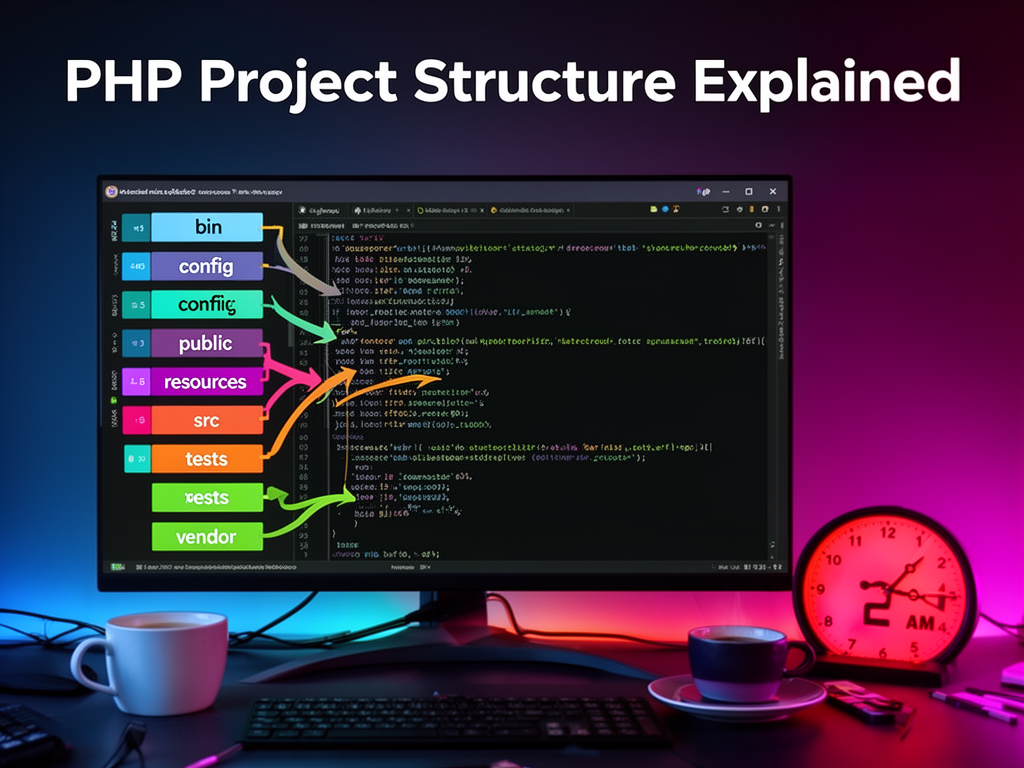
bin/          # CLI scripts, console commands
config/       # Env-specific configs, no secrets hardcoded
public/       # Web root: index.php, assets, entry point only
resources/    # Views, templates, migrations, seeds
src/          # All PHP gold: domain logic lives here
tests/        # Unit, integration, the works
vendor/       # Composer land—don't touch
Why this? Public/ stays lean—security first, only what's web-exposed. Src/ owns the PHP universe, namespaced clean (e.g., src/Cart/Cart.php). No more app/controllers/ spaghetti. Autoloading? Composer's PSR-4 handles it flawlessly.
Fellow developers, have you ever chased a config across envs? Ditch that. Config/ splits by environment—config/dev/database.php, config/prod/cache.php. Pull from .env vars. Secure, flexible, deploy-ready.
Grouping by Feature: The Game-Changer
Traditional archetype grouping? Tolerable for toys, toxic for real apps. Picture jumping folders for one feature: Controller → Service → Repo → Entity. Madness.
Group by feature instead. Code for a domain slice lives together. Glance at src/, and your app's purpose unfolds.
Take that e-commerce example:
src/
  Cart/
    Cart.php
    CartRepository.php
    CartService.php
  Product/
    Product.php
    ProductCategory.php
    ProductRepository.php
    ProductService.php
  User/
    User.php
    UserRepository.php
    UserService.php
Boom. Cart logic? All in Cart/. Need to tweak checkout? One folder. Scales beautifully—even at 20+ entities per feature, it stays flat and findable. If services multiply, sub-group sparingly: Cart/Service/DiscountService.php. But resist deep nests; flat wins for speed.
This mirrors your brain's wiring. Working on User/ auth? Everything's there—no context-switching tax. I once ported this to a client's CRM; their team cut navigation time by half. Magic.
Layers Beneath: MVC Evolved, Services, and Repos
Features grouped, now layer smartly inside. MVC's still gold, but beef it up. Controllers? Skinny request handlers—validate, delegate, respond. No business smarts.
- Controllers:
src/User/UserController.php—routes to services. - Services:
src/User/UserService.php—orchestrate rules (e.g., "validate promo, update cart"). - Repositories:
src/User/UserRepository.php—abstract DB queries, swap PDO for Doctrine seamlessly. - Entities/Models:
src/User/User.php—data shapes, validation.
Why? Single Responsibility Principle shines. Services hold logic, repos hide persistence. Testable, swappable. In one project, we mocked repos for 90% coverage—no DB spins.
Beyond domain: Spot general code bloating src/? Like custom loggers or caches? Extract to src/Framework/ or a separate Composer package. Keeps your core pure, reusable across gigs.
Namespaces, Conventions, and Composer Magic
Namespaces are your structure's spine. Map src/ to root namespace: namespace App; or namespace Acme\Cart;. Composer autoloads it—no config hell.
Naming? CamelCase classes (UserService), kebab-case configs (app-kebab.php). Consistent indentation (4 spaces, PSR-12). Group related funcs in traits or helpers under features.
Composer? Non-negotiable. composer init, require deps, autoload.psr-4. Run composer dump-autoload post-changes. Pairs with Git: .gitignore vendor/, commit everything else.
Pro tip: .env for secrets, config/ loads them. Production? Hide errors, log to storage/logs/.
Testing and Collaboration: Structure Enables Both
Tests/ mirrors src/: tests/Unit/Cart/CartTest.php. PHPUnit or Pest—feature folders make tests intuitive.
Teamwork? Git branches per feature (feature/user-auth), PRs with reviews. Clear structure slashes merge conflicts. Remote PHP devs from India or wherever? They onboard in hours, not days.
I've hired via platforms like Find PHP—folks with structured repos stand out. It signals: "This dev builds for tomorrow."
What if you're framework-bound? Adapt. Laravel? Ditch app/Http/Controllers sprawl; nest by feature in app/Domains/Cart/Http/Controllers/. Symfony? Bundle by domain.
Common Traps and Fixes
- God files: Split early. One
index.phphandling all? Feature folders now. - Tight coupling: Services depend on interfaces, inject repos.
- No tests: Structure begs for them—use it.
- Scaling pains: Monitor; when a feature hits 50 files, extract a micro-package.
Questions for you: Does your structure reveal your app's soul at a glance? If not, refactor this weekend. Small win, huge payoff.
In the quiet glow of your screen, that next project waits—not as a beast, but a trusted companion. Build it right, and it carries you forward.