Contents
How to Choose the Right PHP Specialist for Your Project
Fellow developers, project leads, and team builders—hiring a PHP specialist isn't just about filling a seat. It's about finding someone who turns your vision into code that lasts, breathes, and scales without constant hand-holding. I've been there, staring at a stack of resumes late into the night, coffee gone cold, wondering if this next candidate will finally click with the chaos of a real project.
Picture this: Your e-commerce site is humming along, but traffic spikes crash it. You need a PHP dev who doesn't just patch it—they rewrite the backend with Laravel queues and caching that anticipates the next rush. That's the difference between a hire and a hero.
Why Getting This Right Matters More Than Ever
PHP powers 77% of websites out there, from WordPress giants to custom enterprise beasts. But the ecosystem moves fast—PHP 8.3 brings JIT compiler tweaks and readonly classes that demand fresh eyes. Hire wrong, and you're debugging legacy spaghetti while competitors lap you.
I've watched teams crumble under devs who ace syntax but freeze on production incidents. Or worse, the rockstar coder who ghosts feedback sessions. The right specialist? They own the code, collaborate like it's their own startup, and adapt when frameworks shift.
What if your project is a tight-deadline API? You need Git fluency, MySQL optimization, and that quiet confidence in RESTful services. Miss the mark, and timelines slip. Nail it, and you sleep better.
Defining What Your Project Truly Needs
Start here, before resumes flood in. I remember a project where we skipped this—ended up with a Symfony whiz for a simple WordPress plugin. Disaster.
- Map your tech stack: Laravel for rapid prototyping? Symfony for enterprise heft? CodeIgniter for legacy love? Pin it down, plus servers like Nginx or Apache, databases (MySQL, PostgreSQL, or NoSQL), and architecture like MVC.
- Scope the role: Full-stack with HTML/CSS/JS integration, or backend pure? E-commerce needs secure payments and queues; analytics dashboards crave metrics fluency.
- Timeline and scale: Short sprint? Grab contractors via platforms like Upwork. Long haul? Hunt full-timers who thrive in teams.
Grab a notebook. Jot project goals, must-haves (PHP 8+, OOP mastery), nice-to-haves (front-end basics). This filters noise early.
Have you ever chased "experience" without aligning it to your needs? I have. It burns time and trust.
Building Your PHP Competency Matrix
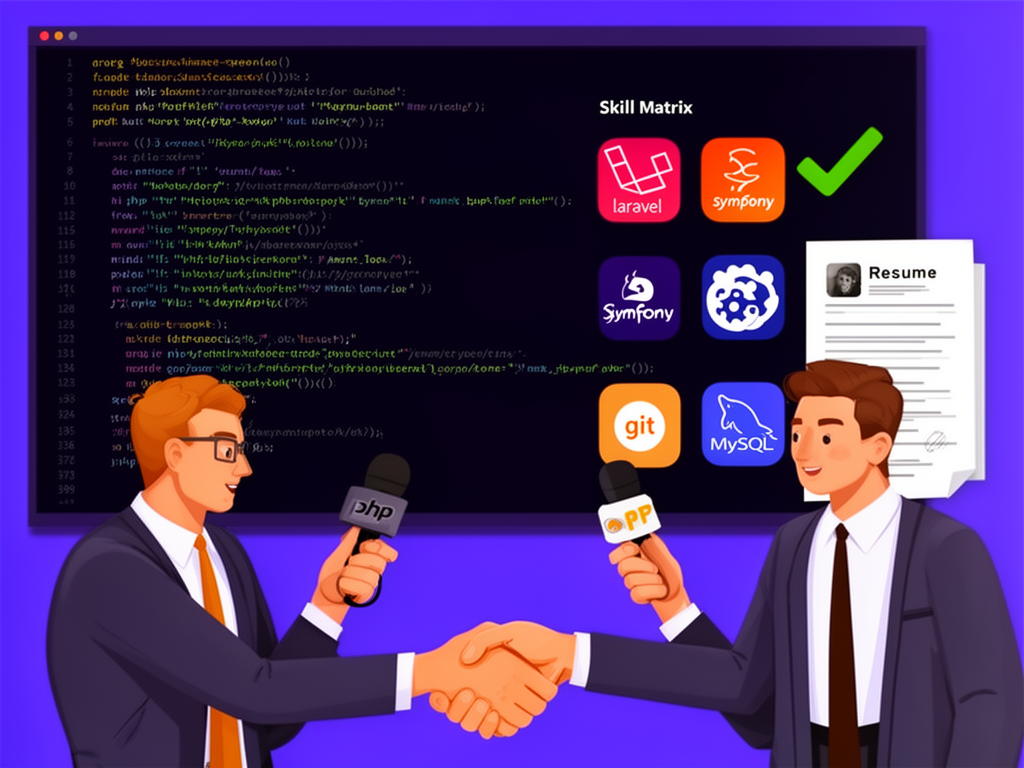
Now, craft a tool that cuts through hype. Call it your secret weapon—a skills matrix tailored to your gig. I built one for a mid-sized SaaS build; it slashed bad hires by half.
First, list core competencies. Technical first, because code doesn't write itself.
Technical Must-Haves That Deliver
No fluff. These are non-negotiable for modern PHP work:
- PHP Core and OOP: Syntax mastery, classes, traits, namespaces. Can they troubleshoot complex bugs in PHP 8+?
- Frameworks: Laravel or Symfony fluency—ORMs like Eloquent, queues, caching. Skip if your stack demands Yii or CodeIgniter.
- Databases and Queries: SQL pros with MySQL/PostgreSQL joins, indexing. Bonus: NoSQL for scale.
- Version Control and Tools: Git workflows, CI/CD badges, reproducible envs via Docker. Look for commit histories showing iteration.
- Full-Stack Glue: HTML/CSS/JS for integration, REST APIs, web servers.
- Security and Performance: Secure defaults, metrics (load times, error rates), production troubleshooting.
Rate levels: Beginner (basic syntax), Intermediate (framework projects), Expert (optimized, scalable apps). Weight them—heavy on frameworks if that's your jam.
Non-tech? Don't sleep on them. Communication turns solo coders into team players. Adaptability? 91% of hiring pros swear by it in this fast world.
Screening Like a Pro
Resumes lie. Portfolios whisper truth.
- Dive into GitHub: Real commits, tests, READMEs with env setups. Fake portfolios scream "copy-paste."
- Coding Challenges: BDD tasks or take-homes mimicking your project. Time-boxed, realistic—no marathons.
- Interviews: Behavioral ("Walk me through that outage"), technical ("Optimize this query"), live code pair sessions.
Red flags? Vague answers, outdated PHP 7 love, no Git evidence. Green lights: Portfolio depth, feedback openness.
I once paired with a candidate on a buggy Laravel migration. Their step-by-step debug? Gold. Hired on the spot.
The Human Side: Soft Skills That Seal Deals
Tech skills get them in the door. Soft ones keep projects alive.
Ever had a dev who codes brilliantly but clashes in standups? Kills morale.
Probe for:
- Communication: Can they explain OOP to a marketer? Vital for remote teams.
- Teamwork and Empathy: Feedback lovers, collaborators who uplift.
- Problem-Solving: Analytical minds who dissect issues, not panic.
- Adaptability: Passion for learning—PHP evolves, so must they.
Scenario questions shine here: "Team deadline slips—your move?" Cultural fit chats reveal synergy.
Onboarding seals it. Docs, access, clear Week 1 goals. Sets tone for wins.
Making the Offer and Beyond
Benchmarks matter. Research salaries by location/experience—top talent bolts fast. Competitive pay, plus remote perks if that's your vibe.
Post-hire? Metrics track success: Delivery speed, bug rates, team feedback.
Platforms like Find PHP streamline this—vetted specialists, ecosystem insights, jobs that match. It's where real PHP pros gather, resumes sharp, ideas flowing.
Hiring isn't a checklist; it's intuition honed by scars from past misses. Choose the specialist who feels like an extension of your team, the one whose code hums with quiet reliability. They'll carry your project forward, leaving you free to dream bigger.