Contents
- 1 Distributed Locks In PHP With Redis
- 2 Why Distributed Locks Exist
- 3 The Basic Idea
- 4 The Practical PHP Pattern
- 5 Why “Delete The Key” Is Not Enough
- 6 Single Redis Instance Or Redlock?
- 7 What PHP Developers Usually Need In Real Life
- 8 Release Rules Matter More Than You Think
- 9 Libraries And Ecosystem Options
- 10 A Small Example Of The Mental Model
- 11 Building It Into A PHP Application
- 12 Retry Or Fail Fast?
- 13 The Hidden Cost Of Comfort
- 14 Redis Locks In The Larger PHP Ecosystem
- 15 What To Remember When You Reach For It
Distributed Locks In PHP With Redis
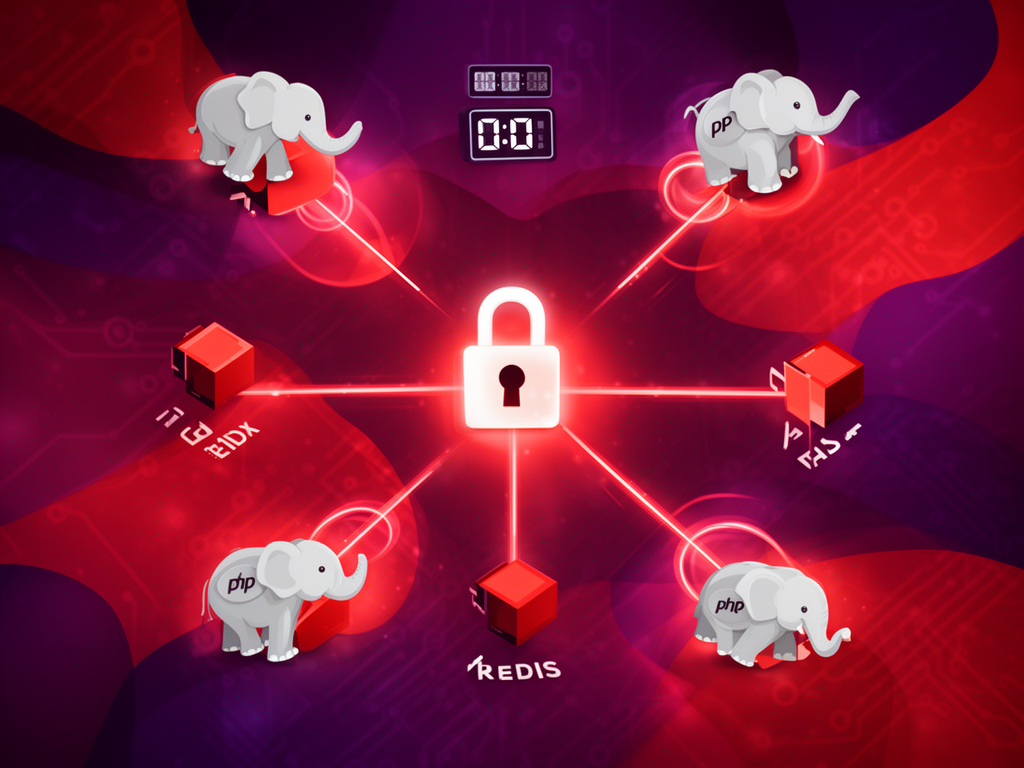
Distributed locks in PHP are one of those topics that look clean on a whiteboard and then get messy the moment real traffic arrives. Redis gives PHP teams a fast, practical way to coordinate work across multiple processes or servers, but the comfort ends the second you need to think about timeouts, lock ownership, and what happens when a worker dies halfway through a job.
If you have ever watched two PHP workers reach for the same invoice, the same payment, or the same queue item at the same time, you already understand the problem. The lock is not about elegance. It is about preventing chaos.
Why Distributed Locks Exist
A distributed system does not care that your code “should” run once. It only cares about what actually happens under load, on retries, after crashes, and during network hiccups. Distributed locks exist to let multiple processes coordinate exclusive access to a shared resource so that only one process performs the critical operation at a time.
In PHP, this usually shows up in familiar places:
- payment processing
- order fulfillment
- scheduled jobs
- idempotent background tasks
- synchronization between multiple app servers
Redis is a natural fit here because it is fast and supports atomic operations, which makes it useful for coordinating access without dragging the database into every contention event.
The Basic Idea
At the simplest level, a lock is just a key in Redis that one process tries to claim. If the key does not exist, the process creates it and proceeds. If the key already exists, the process waits, retries, or exits.
The important part is not the key itself. It is the discipline around it:
- a unique lock key names the resource
- a unique value identifies the owner
- a timeout prevents the lock from living forever if the process crashes
That timeout matters. Redis does not magically clean up after a disconnected client, so a lock must expire or it can become a dead hand on your system.
The Practical PHP Pattern
For most PHP applications, the straightforward approach is enough: acquire the lock with SET using NX and an expiration, do the work, then release the lock safely only if you still own it.
A common pattern looks like this in spirit:
$lockKey = 'payment:12345';
$token = bin2hex(random_bytes(16));

$acquired = $redis->set($lockKey, $token, ['NX', 'PX' => 10000]);

if ($acquired) {
    try {
        // critical section
    } finally {
        // release only if the token still matches
    }
}
That token is not decoration. It is the difference between releasing your lock and accidentally deleting someone else’s lock after a timeout and reacquisition race.
Why “Delete The Key” Is Not Enough
This is the part that tends to get people in trouble late at night, after the coffee has gone cold and the logs start looking unfriendly.
Imagine process A acquires a lock. The job runs longer than expected. The lock expires. Process B acquires the same lock and starts working. Then process A wakes up and blindly deletes the key. Now B is still working, but the lock is gone. Another worker can jump in. The system starts lying to itself.
That is why safe release uses the stored token and an atomic compare-and-delete step, often implemented with a Lua script or an equivalent atomic operation.
Single Redis Instance Or Redlock?
Here the conversation gets more serious.
Redis documents Redlock as a distributed lock algorithm that uses multiple Redis instances and quorum-based acquisition. The idea is to gain stronger fault tolerance by acquiring the lock on a majority of independent Redis nodes.
But there is a significant debate around this. Martin Kleppmann argues that if you need locks for correctness, Redlock is not the right tool, and that you should prefer a proper consensus system or a database with transactional guarantees; he also recommends fencing tokens when locks protect critical shared state. He says that if locks are only for best-effort efficiency, a simple single-node Redis locking algorithm may be acceptable.
That distinction matters more than most blog posts admit.
- If the lock is just an optimization, a single Redis instance with atomic acquire/release is often sufficient.
- If the lock protects correctness, financial integrity, or irreversible side effects, you need to think much harder about your failure model.
What PHP Developers Usually Need In Real Life
Most PHP teams do not need to solve distributed consensus before lunch. They need a reliable way to stop duplicate work.
Typical examples include:
- preventing the same scheduled job from running twice
- serializing payment creation for a user
- ensuring only one importer processes a feed partition
- guarding a cache rebuild or report generation step
This is where Redis locks shine: they are simple enough to adopt, fast enough to not become the bottleneck, and flexible enough to map onto real application boundaries.
A good lock key is usually specific and boring:
job:rebuild-search-indexpayment:user:42import:vendor:acme:2026-07
Boring is good. Boring is operationally honest.
Release Rules Matter More Than You Think
A lock is only useful if you can trust it to disappear on time. That is why the timeout must reflect the expected runtime of the critical section, with some margin but not too much.
A few practical rules help:
- keep the critical section small
- set a realistic expiration
- always release in a
finallyblock - use a unique token per lock acquisition
- assume the process may crash at the worst possible moment
That last point is not pessimism. It is the job.
Libraries And Ecosystem Options
The PHP ecosystem already has Redis locking tools. For example, redlock-php implements the Redis-based distributed lock manager algorithm and exposes lock() and unlock() methods for acquiring and releasing locks. Another package, php-lock-redis, wraps Redis-based locking for distributed systems and offers a simple acquire/release workflow.
These libraries are useful because they hide some of the low-level ceremony. They also remind you that there is no magic. There is only protocol, timeout, and careful ownership tracking.
When choosing a library, look for:
- safe release semantics
- clear timeout handling
- retry behavior you can configure
- support for your Redis client
- predictable failure modes
A Small Example Of The Mental Model
Think of Redis like the doorman at a narrow door.
One person enters. Everyone else waits.
If the person leaves normally, the doorman lets someone else in.
If the person collapses halfway through the hallway, the door eventually opens again because the badge expires.
If the person tries to hand the door key back after the badge already expired, the doorman should check the badge number before accepting it.
That is the whole story, stripped of ceremony.
Building It Into A PHP Application
In practice, the lock should wrap the smallest possible piece of code that needs exclusivity. The narrower the critical section, the less time the lock stays held, and the fewer unpleasant surprises you create for other workers.
A common pattern in PHP applications looks like this:
- derive a stable lock key from the resource
- generate a random token
- try to acquire the lock with expiration
- run the protected work only if acquisition succeeds
- release the lock atomically if the token still matches
That pattern maps well to queue workers, controllers, cron jobs, and Symfony or Laravel service classes. It also keeps the responsibility local, which matters when someone else inherits the code at 11:40 p.m. and only has the logs for company.
Retry Or Fail Fast?
There is no universal answer here. A failed lock acquisition can mean very different things depending on the job.
- For a scheduled report, waiting and retrying may be fine.
- For payment processing, failing fast may be safer.
- For a cache rebuild, either can work.
- For a user-triggered action, the UX may decide for you.
Some libraries allow retries with backoff before giving up. That is useful, but be careful: retries can hide contention that should actually be visible in metrics and alerts.
The Hidden Cost Of Comfort
Redis locks feel simple because the happy path is short. But distributed systems rarely punish you on the happy path. They punish you at the seam between “finished” and “almost finished.”
That is why the strongest advice is not “use Redis” or “avoid Redis.” It is this:
- know whether you need efficiency or correctness
- know how your lock behaves during crashes
- know what happens when a timeout expires mid-work
- know whether a stale worker can still damage shared state
If you only need to reduce duplicate processing, Redis locks are a sensible engineering tradeoff. If you need a hard guarantee, you should inspect the whole system, not just the lock primitive.
Redis Locks In The Larger PHP Ecosystem
This topic keeps coming back because PHP lives close to the messy edge of the web: web requests, cron jobs, queues, and integrations all colliding in one application lifecycle. A good locking strategy is one of the quiet things that makes a system feel calm.
It is also one of the things that never gets celebrated when it works.
No one opens a ticket to praise the lock that prevented a double charge. But the absence of drama is often the real product.
For teams building in the PHP ecosystem, that is why Redis-based distributed locking remains relevant. It is not fashionable. It is simply useful.
What To Remember When You Reach For It
Before you add a lock, ask a few honest questions:
- What is the shared resource?
- What is the failure mode if two workers touch it at once?
- Is this about optimization or correctness?
- How long can the critical section realistically take?
- How will the lock be released if the process dies?
- Can a stale worker still harm the system after timeout?
Those questions save more production incidents than most clever code.
And maybe that is the real lesson here: distributed locks are not about controlling machines. They are about respecting time, ownership, and the awkward space between one process ending and another beginning.